
Over Under Goals Guide: How Football Totals Betting Works for World Cup 2026

This Over under goals guide teaches you to bet on the combined goals in a football match rather than picking a winner. You wager whether the total goals scored by both teams will finish above or below a bookmaker's line, most commonly 2.5, and World Cup 2026's expanded 48-team format adds new scoring dynamics totals bettors need to understand.
> Definition: Over/under goals betting is a wager on whether the total goals scored by both teams in a football match will be higher (over) or lower than a line set by the bookmaker.
TL;DR
- Over/under bets focus on combined goals, not match winners; the most common World Cup line is 2.5 goals.
- Historical World Cup averages hover near 2.5 to 2.7 goals per game, making the 2.5 line a narrow margin.
- The 2026 expanded format, with 48 teams, more group matches, and tighter schedules, will shift scoring incentives and totals value.
- Bankroll management and realistic edge assessment matter more than any single totals strategy.
- Publicly available stats like xG can inform picks, but bookmaker lines already price most common data.
What Over Under Goals Betting Means in Football Totals
Over/under goals betting means betting on total match goals by both teams, measured against a bookmaker's line. You do not need to pick the winner, the correct score, or even which team scores first.
If the line is 2.5 goals, Over 2.5 wins when the match has three or more combined goals. Scores like 2-1, 3-0, and 2-2 all cash the over. Under 2.5 wins when the match ends with zero, one, or two total goals, such as 0-0, 1-0, 1-1, or 2-0.
The half-goal matters. It removes the push.
With a 2.5 line, no match can land exactly on the number, so the bet either wins or loses. That makes totals cleaner than whole-goal lines, but it also makes price discipline more important. A one-nil note beside defensive stats can be more useful than a loud favourite price.
Five Facts Every Football Totals Bettor Must Know
- The 2018 World Cup averaged 2.64 goals per match across 64 games, according to FIFA technical reporting. That sits close enough to 2.5 that small pricing differences matter. FIFA's 2018 technical report recorded 169 goals in 64 matches, or 2.64 per game: https://www.fifa.com/technical/technical-study-group.
- The 2014 World Cup averaged 2.67 goals, while 2010 dropped to 2.27. Tournament scoring varies, so one World Cup should not be treated as a permanent scoring baseline.
- In the 2018 group stage, 26 of 48 matches reached three or more goals, or 54.2%. Over 2.5 was common, but not automatic.
- Across the top five European leagues, average goals rose from 2.57 in 2010-11 to 2.82 in 2019-20, per UEFA landscape reporting. Bookmakers know that broader club scoring trend when building lines. Source: UEFA Club Licensing Benchmarking Report, which tracks scoring trends across major European leagues: https://www.uefa.com/insideuefa/protecting-the-game/club-licensing/.
- World Cup 2026 adds more teams and more matches, which changes rest, travel, and incentive dynamics. A 3-0 win over a weak qualifier and a 1-1 draw against tournament-level opposition should not carry the same modelling weight.
Good World Cup 2026 betting tips deliver priced probability, risk labels, and match context, not promises dressed up as certainty.
How Over Under Goals Markets Work Behind the Odds
Bookmakers set over/under lines by combining historical scoring data, team strength ratings, expected goals models, player availability, and match context. In plain terms, they estimate the most likely goal range, then price both sides around implied probability and margin.
A line is not a prediction you should automatically oppose or follow. Over 2.5 at 1.80 carries a different implied probability from Over 2.5 at 2.05. Neither side is automatically positive expected value. The price is part of the bet.
Markets move when information changes. Injuries, weather, confirmed lineups, and betting volume can all shift the total. I have cross-checked FIFA match reports against federation squad lists when one source marked a centre-forward absent but another named him on the bench. That detail changes the expected goals input.
World Cup markets are liquid. Soft lines are rare.
Tournament stage also matters. Group games with qualification pressure can open up, while knockout matches often reward caution. Dead rubbers are their own small sample warning.
Before You Start an Over Under Goals Bet
Before you start an over/under goals bet, make sure the wager is clear, affordable, and based on more than a recent scoreline. The aim is to decide whether the line and price are usable before emotion or market movement rushes the decision.
- Confirm the goal line: Check whether you are betting over or under 1.5, 2.5, 3.5, or another total, and note whether the line can push. A half-goal line settles cleanly; a whole-goal line may return the stake if the match lands exactly there.
- Set the stake first: Look at your bankroll before the odds screen, then decide the maximum amount you are willing to risk on this match.
- Gather the match context: Review team news, likely lineups, weather, venue, travel, rest days, and tournament incentives such as goal difference or qualification pressure.
- Compare prices: Check at least two bookmakers before treating any total as bettable, because a small odds gap can change the value.
- Reject thin reasoning: Avoid the bet if your case is only that a team just won 4-0 or drew 0-0.
How to Place an Over Under Goals Bet Step by Step
A practical over/under process starts with match context, then moves to probability, price, and stake size. For beginners, a fixed checklist is often safer than reacting to the odds screen glowing before breakfast.
Before staking, write down the line, the odds, your estimated probability, and the reason the market may be wrong. If you cannot explain the edge in one sentence, skip the bet.
- Check match context: Identify the stage, group position, qualification incentive, travel load, and whether either team benefits from a draw.
- Review scoring evidence: Compare recent goals, opponent level, and available xG data for both teams. Recent results need sorting before they become inputs.
- Compare totals lines: Look at 1.5, 2.5, and 3.5 goals across bookmakers rather than treating the main line as the only option.
- Convert odds to implied probability: Divide 1 by decimal odds to estimate the market's break-even probability before margin.
- Set your stake: Use a fixed 1% to 3% bankroll stake and avoid increasing it after a loss.
For World Cup bettors, over/under analysis also overlaps with Over 2.5 predictions, but the wider totals board can offer cleaner prices than one popular line.
World Cup 2026 Format Changes That Affect Football Totals
World Cup 2026 changes the totals problem because 48 teams create a broader quality spread and more group-stage combinations. More mismatches can produce higher-scoring blowouts, especially when a first-choice spine faces a defence under tournament-level pressure.
The format also adds caution. Tighter schedules can reduce recovery time, and tired teams may press less aggressively late in matches. Long travel between North American host cities adds another layer, particularly when a side moves from an indoor venue to afternoon heat or altitude.
Third-place qualification changes final group incentives. Some teams may chase goal difference; others may protect a narrow route through. That makes match state more important than pre-match averages.
Early rounds have generally scored higher than knockout stages, but 2026 may not copy older patterns cleanly. Venue context, travel load, and squad depth will matter more than a raw World Cup average.
The phone balanced on a pub table will show one number. The schedule often explains why that number moved.
Common Over Under Betting Mistakes to Avoid
The most common totals mistake is assuming favourites automatically produce overs. A strong favourite can win 1-0 or 2-0 if the underdog sits deep, slows restarts, and accepts almost no attacking risk.
Recent scorelines are another trap. A team beating a weak qualifier 4-0 does not mean it carries the same attacking expectation against a compact tournament side. Opposition level matters, and regression matters. Finishing runs cool off.
World Cups are not always goal festivals. Averages around 2.5 to 2.7 goals per game still leave many unders, especially once knockout caution arrives. The market knows the same historical numbers most bettors quote in group chats after team news.
Chasing losses is worse than a bad read. A loss limit ticked in a notebook is boring, but it stops one poor total from becoming five emotional bets.
WC Betting Tips can help organize match angles such as team news, totals lines, xG context, and bankroll notes, but no public xG table or model output becomes an edge unless the price is wrong.
Using Expected Goals (xG) Data for Over Under Decisions
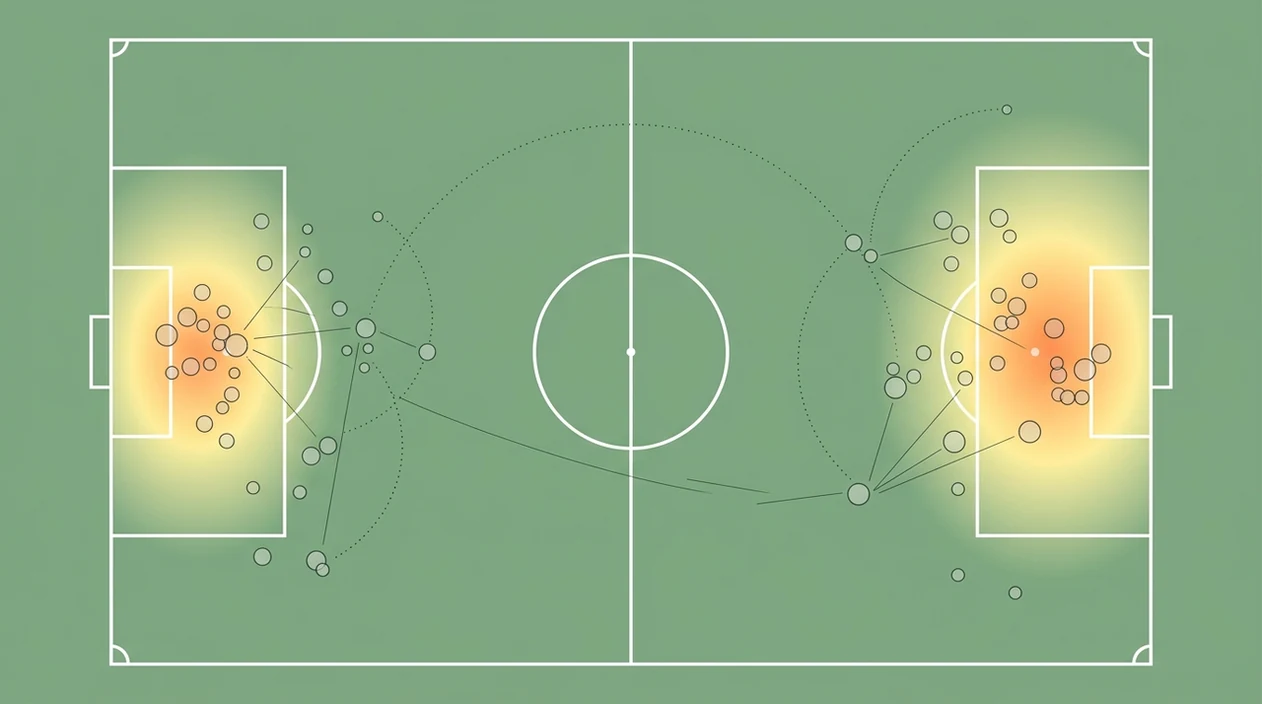
Expected goals, or xG, measures chance quality rather than final score. For over/under betting, it helps separate a dangerous 1-1 from a low-event 1-1 where both goals came from rare errors.
A team scoring far above xG may regress, especially if the chances are low-quality shots or set-piece clusters. A team creating steady chances but missing them may be more interesting for overs than its recent scorelines suggest. For totals, xG usually works best when it is combined with team tempo, defensive structure, and match incentives.
Free sources such as FBref and Understat can help with club form and some qualifying context. National team samples are thinner, though. One screen with a CONCACAF table open and another with goals for and against by opponent tier can still leave uncertainty.
xG supplements analysis; it does not replace price. Bookmakers already use similar inputs in sharp totals markets.
If you prefer goal involvement from both sides, BTTS predictions use related evidence but answer a different betting question.
Sources Used for Football Totals Analysis
The strongest football totals analysis uses official match evidence, reliable chance-quality data, and market prices side by side. No single source is enough, especially when World Cup samples are small and team context changes quickly.
FIFA match reports and technical reports are useful for World Cup goal averages, tournament trends, shot profiles, and stage-by-stage context. For expected goals, public sources such as FBref, Understat, and StatsBomb can help where coverage exists, although their models and competition depth vary. Club data is usually richer because players appear weekly in settled systems; national-team data is thinner, more opponent-dependent, and often shaped by friendlies or uneven qualifying groups. Bookmaker odds should be read as market prices with margin included, not neutral forecasts handed down from a model.
- Start with official tournament reports for goals, match events, and competition-wide averages.
- Compare xG sources when available, noting whether the sample is club, qualifying, or tournament play.
- Separate club form from national-team evidence before projecting roles, tempo, or chemistry.
- Check lineups and context for injuries, rotation, weather, travel, and incentives.
- Treat the odds as a price and ask whether your evidence supports a better probability.
Limitations
Over/under betting has real limits, especially in a World Cup setting.
- National team samples are small. A country may play only a few competitive matches against comparable opposition before the tournament.
- Squads change quickly. One centre-back injury or a suspended holding midfielder can alter the total more than a five-match average suggests.
- Venue effects are hard to price. Altitude, heat, indoor stadiums, surface familiarity, and travel between host cities can all affect tempo.
- Public stats are not hidden edges. xG, recent goals, and lineup news are usually baked into bookmaker totals.
- The 2026 format is new. Strategies based on 32-team tournaments may not transfer cleanly to 48 teams.
- Variance can be brutal. A sound under can lose to a deflected shot in minute 89.
- Over/under betting is gambling. A careful method reduces avoidable mistakes, but it cannot guarantee profit.
For cautious bettors, Draw no bet tips may feel lower variance than totals because the bet structure handles one match outcome differently.
Reset the plan.
FAQ
What does over 2.5 goals mean?
Over 2.5 goals wins if the match has three or more total goals scored by both teams. It loses if the match finishes with zero, one, or two total goals.
Are World Cup games usually high scoring?
World Cup scoring averages often sit around 2.5 to 2.7 goals per game, but variation is meaningful. The 2010 tournament averaged lower than 2014 and 2018.
What is a good over-under strategy?
A realistic over-under strategy combines match context, xG data, line comparison, implied probability, and strict bankroll management. No single stat should decide the bet.
Does the 2026 format change totals?
Yes, the 48-team format may affect totals through more group matches, wider team-strength gaps, tighter schedules, and different third-place incentives. The direction can vary by match.
Can you parlay over-under bets?
Yes, totals bets can be combined into parlays or accumulators. Variance compounds with each added leg, so expected value usually falls unless each selection is mispriced.
Why is 2.5 the most common line?
The 2.5-goal line is common because many football scoring averages sit near that number. It also removes the possibility of a push because a match cannot finish with exactly 2.5 goals.
How do bookmakers set totals lines?
Bookmakers set totals using scoring models, xG, team strength ratings, injuries, weather, lineups, and market activity. Prices adjust as new information and betting volume arrive.
Is under betting safer than over?
Under betting is not inherently safer than over betting. Value depends on the specific line, odds, team styles, and match context.