
Betting Risks in World Cup Football Markets

Quick answer: Betting risks during the World Cup include chasing losses across packed match schedules, impulsive in-play wagering, accumulator overexposure, and underestimating the house edge, all of which can cause serious financial and emotional harm. Among U.S. sports bettors, nearly 16% meet criteria for problem gambling, making football betting risk far higher than most casual punters assume. Understanding these risks before the 2026 tournament is the single most important step you can take.
> Definition: Betting risks are the financial, emotional, and behavioural dangers that arise when placing wagers on football matches, including loss of money, problem gambling, and exposure to market manipulation.
This guide is general harm-reduction information, not medical, legal, or financial advice. If betting is affecting debt, safety, mental health, work, or relationships, contact a licensed professional or a gambling-support helpline.
TL;DR
- World Cup schedules compress dozens of matches into weeks, multiplying gambling risk through fatigue and emotional attachment.
- In-play and micro-betting markets create rapid-fire decision points that drive impulsive losses.
- No staking system or football knowledge eliminates the house edge, consistent profit from betting is extremely unlikely.
What Betting Risks Mean for World Cup Football Bettors
Betting risks in World Cup football mean the realistic ways a wager can harm your money, mood, behaviour, or judgment. It is not just losing one bet. It is losing control of the decision process.
The World Cup raises gambling risk because the schedule is compressed. There may be several matches in one day, then another slate the next morning. A bettor can move from a noon total goals bet to a late-night corners market without ever stepping back.
National feeling adds heat. Betting against your own team feels strange. Backing them too heavily feels easy. I have seen the group chat buzzing after team news, and the question is rarely calm: “Is this a banker?”
It never is.
Good World Cup 2026 betting tips should deliver probability, price context, and risk labels, not certainty, pressure, or a promise that the bet is safe.
Five Facts About Football Betting Risk Every Punter Should Know
- Among a national sample of U.S. sports bettors, 16.2% met criteria for problem gambling, according to 2023 research on sports betting behaviour (National Council on Problem Gambling).
- Online gamblers have higher rates of gambling problems than land-based gamblers, according to a systematic review of online gambling studies (Current Addiction Reports).
- In Great Britain, men aged 16 to 34 who bet on sports online are more than four times as likely to be problem gamblers as the national average, per Gambling Commission data (Gambling Commission).
- Monthly online sports bettors in England and Scotland are more likely to report gambling-related harms, including debt and mental health problems, according to Public Health England evidence (GOV.UK evidence review).
- In 2021, 1.2% of U.S. adults, about 2.2 million people, were classified as having gambling disorder, with sports betting highlighted as a key growth area (National Council on Problem Gambling).
For most bettors, the safer route is to treat football betting risk as a health and money issue first, not as a puzzle solved by better match research.
How Betting Risk Works in World Cup Markets
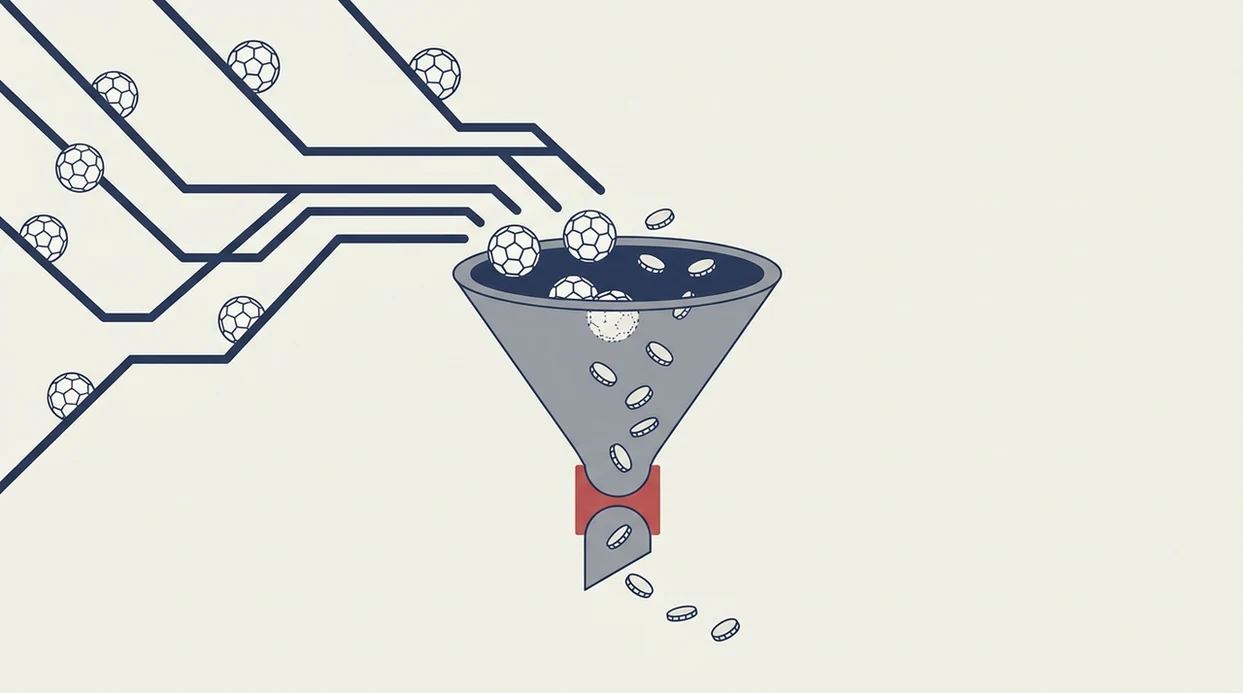
Betting risk works through odds margin, variance, and market design. The bookmaker builds a house edge into the price, then short-term randomness makes that edge hard to feel until losses stack up.
Odds Margin and Variance
Odds margin means the prices are shaded so the book expects profit over time. Implied probability is the price converted into a percentage. If both sides of a market add up to more than 100%, that extra slice is the margin.
Variance is the nasty part. You can win three bets with poor value, then lose five bets that were priced about right. That does not mean the model broke. It means football is noisy.
In-Play and Micro-Betting Mechanics
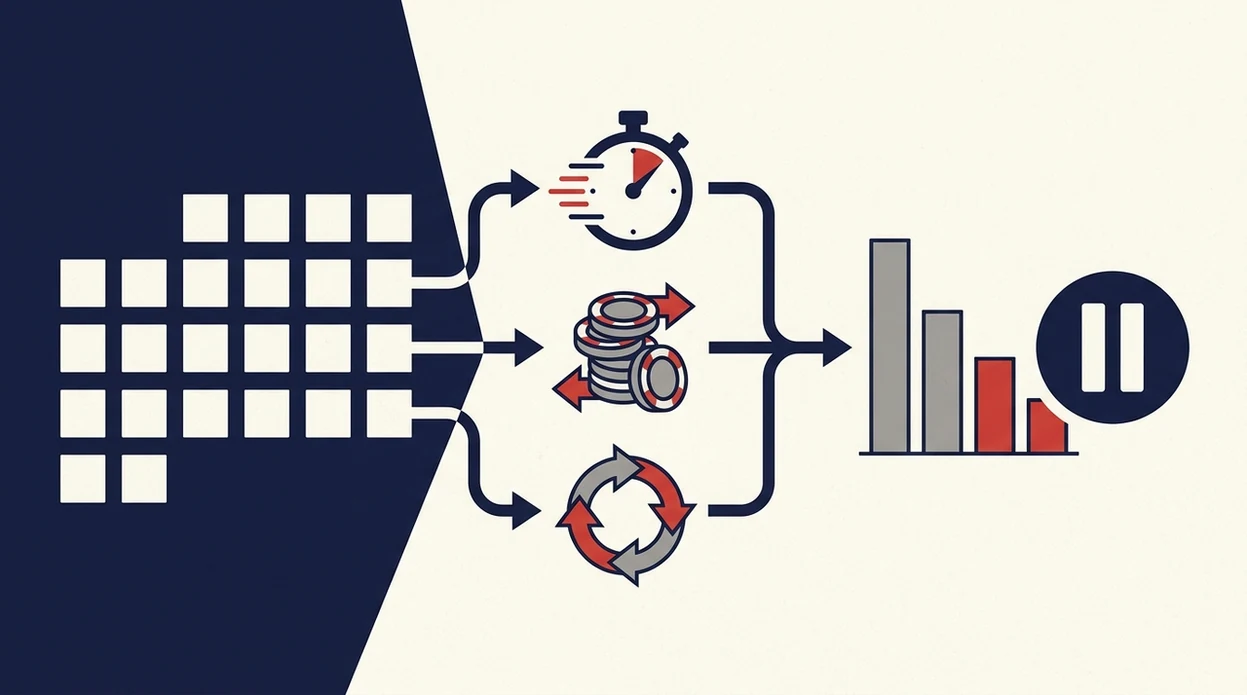
World Cup 2026 markets will include props, same-game parlays, player shots, cards, corners, and micro-bets. Each one adds another decision point. The paused bet slip before confirmation is where many bad bets should die.
Live betting settles quickly, so the brain gets fast feedback. Late-night matches make it worse. Tired eyes, a red card, and a phone screen at 1:40 a.m. are not a strong risk committee.
Common Myths About Gambling Risk During the World Cup
Does knowing football well remove gambling risk? No. Football knowledge can improve your reasoning, but it cannot remove the house edge, variance, or emotional bias.
Does live betting become safer because cash out exists? No. Cash out is another priced market. It may reduce one loss, but it can also encourage more entries because the bettor feels protected.
Can small stakes avoid serious trouble? Not always. A small bet across four matches a day becomes a real number by the end of the group stage. Add accumulators and the failure points multiply.
Does match-fixing only affect obscure leagues? No. The World Cup itself has strong integrity systems, but suspicious betting patterns can appear around lower-tier FIFA-related fixtures and smaller streamed games.
If you are new, World Cup betting for beginners is easier to read before any tips page because it explains markets before emotion gets involved.
Match-Fixing and Integrity Risks in Football Betting
Integrity risk means a market may not be as clean as the bettor assumes. Even a sharp read on tactics does not protect you if the information environment is distorted.
Suspicious betting patterns are more common in lower-tier football, youth games, friendlies, and smaller FIFA-linked matches than in headline World Cup fixtures. But the risk still matters because data commercialisation has pushed odds markets into more obscure games, including some FIFA+ streamed fixtures.
Offshore and unregulated bookmakers add another problem. You may face unclear settlement rules, weak complaints processes, or delayed withdrawals. A low price can look tempting, but the value note beside a low price means little if the book itself is not trustworthy.
Reading the game correctly is not the same as betting in a fair market.
Specific Guarantees: What Responsible Betting Can and Cannot Do
Responsible betting tools can reduce harm, but they cannot make gambling risk-free. Deposit limits, loss limits, time-outs, reality checks, and self-exclusion schemes are guardrails, not guarantees.
Tools like WC Betting Tips, odds comparison sites, and prediction pages can label risk and explain markets. They cannot stop a bettor from chasing losses after a bad night. For lower-variance framing, Safe bets today should still be read as “lower risk,” not “no risk.”
Responsible gambling badges can create false comfort. A regulated site still has a house edge. If limits are not working, professional help is the gold standard. If gambling has triggered thoughts of self-harm, immediate danger, or feeling unable to stay safe, contact local emergency services or a crisis line before dealing with any betting account. Clinicians typically recommend early support when gambling causes debt, secrecy, anxiety, or relationship conflict.
The weekly stake limit on the fridge note only works if you obey it.
What Betting Risk Advice Does Not Cover
General betting risk advice is not a clinical assessment, a legal opinion, or a prediction of your personal financial outcome. It can explain danger zones, but it cannot diagnose gambling disorder.
No guide can know your income, debts, mental health, family pressure, or previous gambling history. That matters. Two people can place the same £20 bet and face very different consequences.
Regulatory rules also differ by country and state. Age limits, legal operators, tax rules, and self-exclusion systems are not universal. Use a Legal betting guide before assuming a site is allowed where you live.
Past World Cup trends have limited predictive power for 2026. The expanded format, travel demands, squad rotation, and market depth will change how prices behave. Old angles can go stale fast.
How to Get Help With Football Betting Risk
If football betting feels hard to stop, get help early. You do not need to wait for a crisis, a maxed-out card, or a hidden account to ask for support.
- Contact a national helpline. In the UK, use GamCare and the National Gambling Helpline; in the U.S., contact the National Council on Problem Gambling.
- Use international support. Gambling Therapy offers help for people outside the UK.
- Activate self-exclusion. UK bettors can use GAMSTOP to block access to participating gambling sites.
- Speak to a GP or counsellor. Medical and mental health support can help when betting is linked to anxiety, depression, or debt.
- Tell one trusted person. Secrecy makes chasing easier.
For urgent next steps, Gambling addiction help is the better route than reading another prediction page.
Limitations
Betting risk advice has hard limits. It can reduce confusion, but it cannot remove gambling risk.
- No harm-reduction strategy makes football betting risk-free.
- Staking systems such as Martingale are unproven for long-term profit and often increase losses after a bad run.
- Self-assessment tools are useful prompts, not substitutes for professional support.
- Regulated bookmakers still build an odds margin into their markets.
- Historical World Cup trends have limited value for 2026 because formats, squads, and market depth change.
- Individual financial and psychological circumstances vary widely.
- Accumulators can look controlled on paper, but one leg too many often turns a reasonable opinion into a fragile bet.
- A “sure” label is dangerous language. Sure win prediction today should be treated as a warning phrase, not a betting category.
If you feel relief only after placing the bet, that is a signal worth taking seriously.
FAQ
What are the main betting risks in World Cup football?
The main betting risks are financial loss, chasing losses, emotional overreaction, problem gambling, and exposure to unfair or poorly regulated markets. Accumulators and in-play bets can increase those risks.
Why can World Cup betting be riskier than regular league betting?
World Cup betting can be riskier because matches are packed into a short schedule and national loyalty can cloud judgment. More live markets also create more chances to bet impulsively.
Can small football bets still cause serious harm?
Yes. Small bets can become harmful when they are repeated across many matches, added to accumulators, or used to chase earlier losses.
Is in-play betting more dangerous than pre-match betting?
In-play betting can be more dangerous because odds move quickly and markets settle fast. That speed can encourage impulse decisions during emotional moments.
Does football knowledge reduce betting risk?
Football knowledge may improve analysis, but it does not remove variance or the bookmaker’s margin. A good read can still lose.
What is the 80/20 rule in gambling?
The 80/20 rule is the idea that a small share of bettors can generate a large share of gambling revenue. It is a warning about heavy users, not a fixed law for every bookmaker.
How do I spot problem gambling signs in myself or someone else?
Common signs include chasing losses, hiding bets, borrowing money, mood swings, and betting more than planned. Missing work, sleep, or bills because of betting is also a warning sign.
Where can I get help for football betting problems?
UK bettors can contact GamCare or use GAMSTOP, while U.S. bettors can contact the National Council on Problem Gambling. International users can try Gambling Therapy or speak to a doctor or counsellor.