
Odds Movement in World Cup 2026 Betting Markets

Quick answer: Odds movement is the shift in betting prices over time as sportsbooks react to sharp money, team news, and public betting pressure. In World Cup 2026 markets, tracking line movement helps you distinguish genuine value from noise, but understanding why a number moved matters more than chasing the current price.
> Definition: Odds movement (also called line movement or betting market movement) is the change in a sportsbook's published odds between the time a market opens and the moment it closes, driven by incoming wagers, new information, and the book's need to manage risk.
TL;DR
- Sharp bettors and syndicates move World Cup lines early when limits are low; public money dominates closer to kickoff.
- Big-name teams like Brazil and Argentina attract lopsided public action that can inflate prices and create value on the other side.
- Comparing odds movement across multiple books is the most reliable way to spot genuine steam moves versus single-book adjustments.
What Odds Movement Means in World Cup Betting
Odds movement in World Cup betting means the price has changed because the market has absorbed money, information, or risk. If Argentina open at 1.85 and drift to 2.05, the question is not “are they worse now?” The better question is “what did the market learn?”
Line movement and betting market movement are the same idea in plain language. A sportsbook posts a number, bettors react, new information arrives, and the price shifts. World Cup markets can move harder than domestic leagues because national teams play less often. One missing centre-back, one tactical leak, or one weather swing can change the expected goals picture quickly.
The current price is only the surface. The reason behind the move is the useful part. For most bettors, reading the cause of odds movement is more valuable than reacting to the latest number because price direction alone does not prove value.
The phone refresh at 2:55 p.m. tells you plenty.
Before You Track World Cup Odds Movement
Before you track World Cup odds movement, set the ground rules for what you are measuring. A clean record stops you comparing different markets, illegal books, or emotional late moves as if they were the same signal.
- Define the market first before you compare prices. A three-way moneyline, Asian handicap, total goals line, futures outright, and group winner market all move differently, so keep each one in its own lane.
- Use regulated sportsbooks that are legal where you live. If a book is unavailable, unlicensed, or not taking real-money bets in your location, its price should not drive your decision.
- Record the same fields every time: decimal odds, timestamp, bookmaker, opening price, and current price. Decimal odds make cross-book comparison cleaner, especially when U.S., fractional, and international formats get mixed.
- Separate futures from match-day moves before calling something steam. A squad rumor shortening an outright is not the same as a confirmed lineup move 45 minutes before kickoff.
- Set your bankroll limit before the market gets noisy. Late price changes feel urgent; your stake size should already be decided.
Five Key Facts About Betting Market Movement
- Information moves prices first. Injuries, confirmed lineups, weather, tactical changes, and travel issues all affect betting market movement because they change a team’s true chance, not just public mood.
- Sharp money and public money are different forces. Sharp bettors often move early lines with fewer bets but larger stakes. Public bettors usually move popular teams through volume, especially on Brazil, Argentina, and England.
- Early World Cup lines are softer. Limits are often lower when markets first open, so a respected account can shift a number faster. Late lines are usually more efficient because more money and more information have entered.
- Public-side bias can inflate famous teams. Behavioral betting research describes this as the favorite-longshot bias: bettors often overpay for familiar favorites or high-payout longshots, especially in emotional markets like the World Cup. See Snowberg and Wolfers’ overview in the Journal of Economic Perspectives: https://www.aeaweb.org/articles?id=10.1257/jep.24.2.149. In a World Cup, shirt color sometimes prices louder than xG.
- Cross-book movement matters most. A one-book move may be risk management. A same-direction move across four or five books is closer to genuine steam, especially when the timing matches team news.
Good world cup 2026 betting tips explain probability, price, and downside, not a magic route around variance.
How World Cup 2026 Odds Movement Works Behind the Scenes
Sportsbooks build opening World Cup lines from rating models, trader judgment, injury assumptions, and market intelligence. The first price is not a final verdict. It is a starting offer with margin built in.
How odds movement works: early limits are lower, so sharp bettors can test weak numbers before the public market fully forms. Later, limits rise and the market becomes deeper. Books then adjust prices to manage liability and react to sharper information. They are not always trying to split action 50/50. Sometimes they hold a position because the price is still in their favor.
Global liquidity makes this quick. For scale, U.S. commercial sportsbooks alone handled $119.84 billion in sports wagers in 2023, according to the American Gaming Association’s State of the States report: https://www.americangaming.org/resources/state-of-the-states-2024/. That level of liquidity is why major World Cup information gets priced fast. Expected value is the key term here. In normal words, you want a price better than the true probability.
Closing line value is the long-term benchmark. If you take 2.05 and the market closes 1.85, your process probably beat the number, even if that single bet loses.
Six Steps to Track Line Movement for World Cup 2026 Bets
Use line movement as a record, not a mood board. The practical edge comes from comparing where a price started, where it moved, and why it moved.
- Set up odds-comparison tools across at least three to five global sportsbooks before the market gets busy. For concrete benchmarks, compare regulated books such as Pinnacle, bet365, FanDuel, DraftKings, and Unibet where they are legal in your location. A proper Odds comparison check stops you mistaking one book’s adjustment for full-market steam.
- Log the opening line as soon as the World Cup 2026 market is posted, including date, time, book, and market type.
- Monitor team news feeds for injuries, squad announcements, suspensions, and tactical changes around the 75-minute confirmed-lineup window.
- Compare movement direction and size across books to see whether the shift is broad, slow, sudden, or isolated.
- Assess the cause before betting. Sharp-driven movement, public pressure, and weather reactions deserve different treatment.
- Record your entry price and closing line after the match starts, then review whether your bets regularly beat the market.
For disciplined bettors, tracking opening price versus closing price is often more useful than tracking wins alone because short-term results include heavy variance.
Sharp Money vs. Public Betting Pressure in World Cup Markets
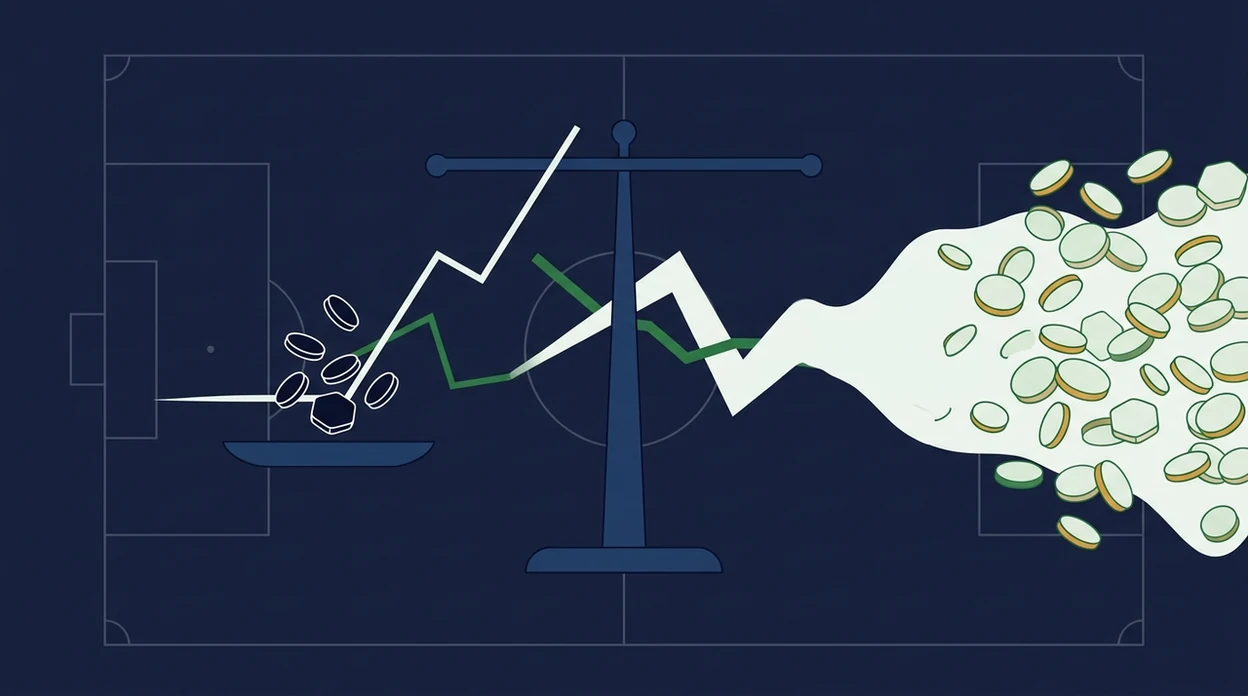
Sharp money means action from respected bettors, limited accounts, high-stakes syndicates, or model-driven groups that books take seriously. Public pressure means lots of smaller bets, usually on visible teams, famous players, and simple narratives.
During the World Cup, Brazil, Argentina, England, France, and similar sides can attract public money even when the price has already shortened. That creates favorite-longshot bias in a real setting. Bettors overpay for teams they know and outcomes they want to watch happen.
Account-level research from the UK Gambling Commission-funded Patterns of Play project found that a small share of high-spend accounts contributed a disproportionate share of online gambling yield: https://www.begambleaware.org/sites/default/files/2021-03/Patterns%20of%20Play%20Report%20FINAL.pdf. That does not mean every public move is wrong, but it is a warning against following crowd movement without price discipline.
I’ve had the WhatsApp message enough times: “Is this a banker?” No. Translate it into probability and downside. If the public takes England from 1.78 to 1.60 without a true team-news reason, the safer route may be to pass or look at the underdog handicap. Not glamorous. Often useful.
Tools like WC Betting Tips can help organize match tips with risk labels, but the price still has to make sense.
World Cup 2026 Futures Odds Movement vs. Match-Day Line Movement
World Cup futures odds movement is slower, wider, and noisier than match-day movement. Futures prices can change daily because of injuries, club form, squad rumors, managerial decisions, and global money flow, not just because a national team played.
A key injury can move two markets at once. If a first-choice goalkeeper is ruled out, outright winner odds may drift and group-stage match prices may shift the same afternoon. That is why futures markets and match markets should be read together.
Early futures movement is often messy. Months before kickoff, books are pricing uncertainty as much as team strength. Closer to the tournament, squad clarity improves and futures prices become more informative. If you are tracking World Cup futures odds, cross-reference them with match-day numbers before calling a move sharp.
The notebook gets ugly here. Outrights, groups, top scorer, injuries, all on one page.
World Cup odds movement usually works best when it is checked across related markets, while isolated futures drift fits bettors who are prepared to wait and absorb uncertainty.
Four Common Myths About Odds Movement in Football Betting
Myth 1: Big line movement always means insider information. Often it is just public overreaction, a limit increase, or one book managing liability after taking uneven action.
Myth 2: Following the move guarantees the right side. Closing prices can still be wrong. A market can move toward a popular team and still be shaded by public demand.
Myth 3: Sportsbooks move odds to trap the public. Books move numbers to manage risk, respond to sharp money, and incorporate updated information. The “trap line” idea is usually lazy analysis.
Myth 4: World Cup futures only change after matches. Futures can move on training reports, injuries, club form, coaching changes, and money from other regions.
The price screen can feel dramatic when a number flashes red. Calm down. Ask what changed. If nothing changed except public appetite, the bet I would trim first is usually the one chasing movement late.
For outright context, compare broad markets such as World Cup odds with narrower markets like Group winner odds.
Limitations
Odds movement is useful, but it is not a betting system by itself. It gives clues. It does not remove the house edge.
- Line movement cannot overcome the bookmaker margin or guarantee profit.
- In efficient knockout-stage markets, late movement often reflects widely known information with little value left.
- Public betting-split data can be incomplete, delayed, or selectively reported by sportsbooks.
- Tactical changes, travel fatigue, altitude, heat, and recovery gaps are only partly captured in price movement.
- Blindly following steam can lose money when the move is public-driven or already overcorrected.
- Long-dated World Cup 2026 futures are exposed to coaching changes, political issues, withdrawals, and injuries.
- Some markets have thin liquidity, so one respected bet can make a move look stronger than it is.
- Cash-out decisions can distort your own review if you do not log the original price.
A bankroll column in a spreadsheet is boring until it saves you from one leg too many.
FAQ
What causes odds to move?
Odds move because sportsbooks react to new information, sharp money, public betting volume, and liability. Team news, injuries, weather, and tactical changes are common World Cup drivers.
Is sharp money the same as insider info?
Sharp money is not the same as insider information. Sharp bettors usually move first because they have stronger models, faster news processes, or better price discipline.
Do World Cup futures move daily?
Yes, World Cup futures can move daily. Injuries, club form, squad rumors, coaching changes, and global money flow can all shift outright prices.
Should I always follow line movement?
No, you should not blindly follow line movement. A move can be sharp, public-driven, overcorrected, or already priced out.
When do World Cup lines sharpen most?
World Cup lines usually sharpen closest to kickoff. Limits are highest then, and confirmed lineups give the market better information.
Can public betting move odds significantly?
Yes, public betting can move odds significantly in major tournaments. Popular teams such as Brazil, Argentina, and England can shorten through high-volume recreational money.
Does late movement mean better value?
Late movement does not always mean better value. It often reflects widely known information, so the exploitable edge may already be gone.
How many books should I compare?
Compare at least three to five global sportsbooks when reading line movement. WCBettingTips and other odds tools are most useful when they show whether a move is market-wide or isolated.