
Value Betting Guide For World Cup 2026 Football

Quick answer: This Value betting guide teaches you to identify World Cup football bets where the bookmaker's odds imply a lower probability than your own data-driven estimate, creating a positive expected value over time. Value betting is not a guaranteed profit system, it is a disciplined framework for finding mispriced odds using form, xG, injuries, and line shopping, combined with strict bankroll management to survive the inevitable losing streaks.
> Definition: Value betting is the practice of placing bets only when your estimated probability of an outcome is higher than the probability implied by the bookmaker's odds, resulting in a mathematically positive expected value over a large sample of wagers.
TL;DR
- Value betting means backing outcomes where your estimated probability exceeds the bookmaker's implied probability, not chasing big odds or guaranteed wins.
- Expected value, or EV, is the core metric: multiply each outcome's profit or loss by its probability to see if a World Cup bet is mathematically worth placing.
- Even skilled value bettors lose regularly. Bankroll management, emotional discipline, and realistic expectations about variance are non-negotiable.
What Value Betting Means In World Cup Football
Value betting in World Cup football means betting only when your estimate of an outcome’s true chance is higher than the chance implied by the bookmaker’s odds. If you price Argentina to win a group match at 55%, but the market offers odds implying 48%, that is a possible value bet.
The pick is not “Argentina will win.” The pick is “this price is too big if my probability estimate is sound.” That difference matters.
A favourite can be poor value if the odds are too short. A 12/1 outsider can also be poor value if its real chance is closer to 4% than 8%. Value is about price versus probability, not team reputation or payout size.
I usually write the estimate first, then check the screen. If the odds have already moved from 2.05 to 1.85, the edge may have gone. That is boring work, but it is the work.
For beginners, How odds work is the first piece to understand before trusting any value call.
Five Facts Every Value Bettor Must Know
- Value betting targets positive expected value, not guaranteed winners. A bet can be correct at the price and still lose because football is noisy.
- Expected value is the probability-weighted average result of a bet. In simple terms, EV asks whether the likely profit outweighs the likely loss when the same type of bet is repeated many times.
- World Cup 2026 value betting needs more than form tables. Useful inputs include xG, injuries, suspensions, rest days, travel, tactical matchups, likely lineups, and market movement.
- Good value bets lose often. A 40% true-chance bet loses six times in ten on average, so flat staking and emotional control matter more than one result.
- Bookmaker margin and line movement reduce edges quickly. The overround is built into the market, and popular World Cup prices can tighten fast once team news lands.
Probable elevens circled in red pen still beat a gut feel. Not always, but often enough to matter.
How Expected Value Betting Works Behind The Odds
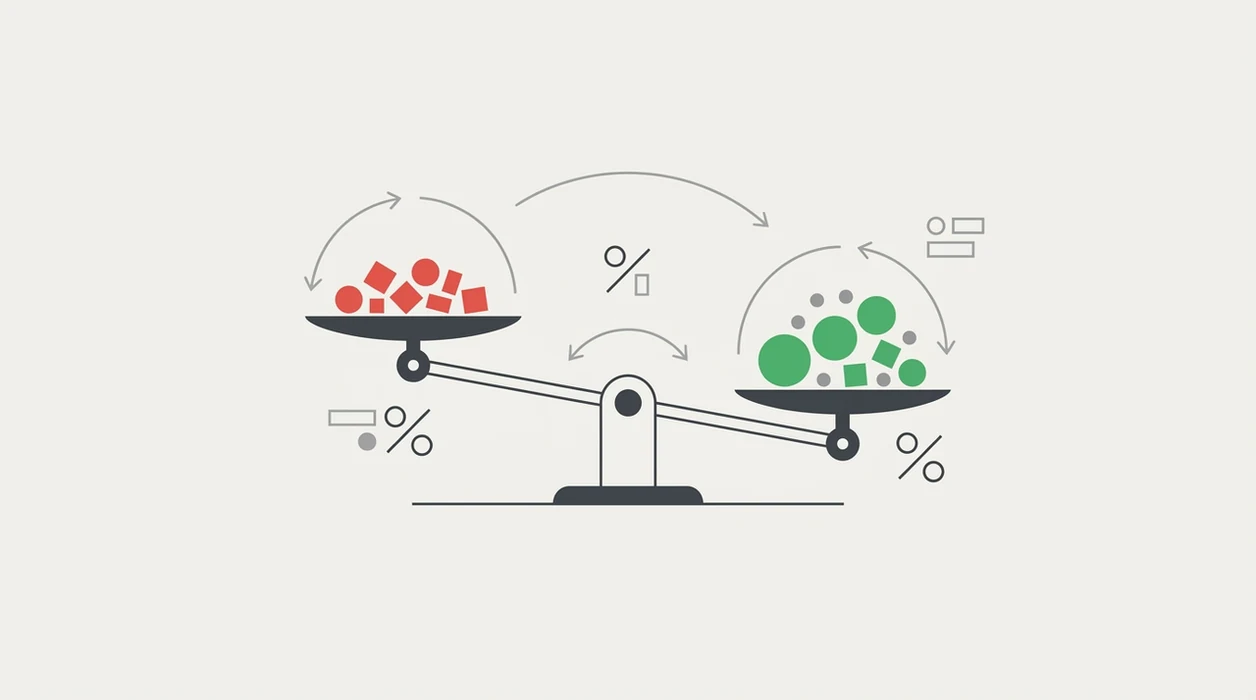
Expected value betting works by converting odds into implied probability, comparing that number with your own estimate, then calculating whether the bet has positive EV. The mechanism is simple; the hard part is making the probability estimate honest.
Implied Probability From Decimal Odds
Decimal odds convert to implied probability with this formula: implied probability = 1 / decimal odds. Odds of 2.50 imply 40%, before adjusting for bookmaker margin. Odds of 1.80 imply 55.6%.
Bookmakers also build in overround, meaning the total implied probabilities across all outcomes usually add up to more than 100%. That extra slice is the bookmaker’s margin. It is why a match market can look fair until you add every outcome together.
Expected Value Calculation Step By Step
Use this EV formula: EV = (Probability × Net Profit) − ((1 − Probability) × Stake).
Say you estimate Brazil at 50% to win and can bet £10 at 2.20. Net profit is £12. EV = (0.50 × £12) − (0.50 × £10) = £1. That is +EV on your estimate.
One bet proves nothing. Positive EV only matters over a large sample, because penalties, red cards, and one deflected shot can wreck the cleanest model.
Requirements Before You Start Value Betting On World Cup 2026
You need five things before value betting World Cup 2026 markets: multiple odds sources, a separate bankroll, reliable data, a tracking sheet, and the temperament to lose without chasing. Skip one, and the method weakens fast.
Use more than one bookmaker account where legal, because the whole edge may be the difference between 2.05 and 2.18. A single price screen gives you less information and worse execution.
Keep your betting bankroll away from rent, bills, food, and savings. A bankroll column in a spreadsheet is not glamorous, but it stops “just one more” from becoming the plan.
Reliable inputs include xG platforms, confirmed team news, fixture schedules, rest-day gaps, and tactical notes. Tools like WC Betting Tips, Free Super Tips, and Forebet can help organize angles, but your stake still needs its own logic.
The emotional requirement is real. If your national team is involved and you cannot price the match coldly, pass.
How To Find Value Football Bets At The World Cup
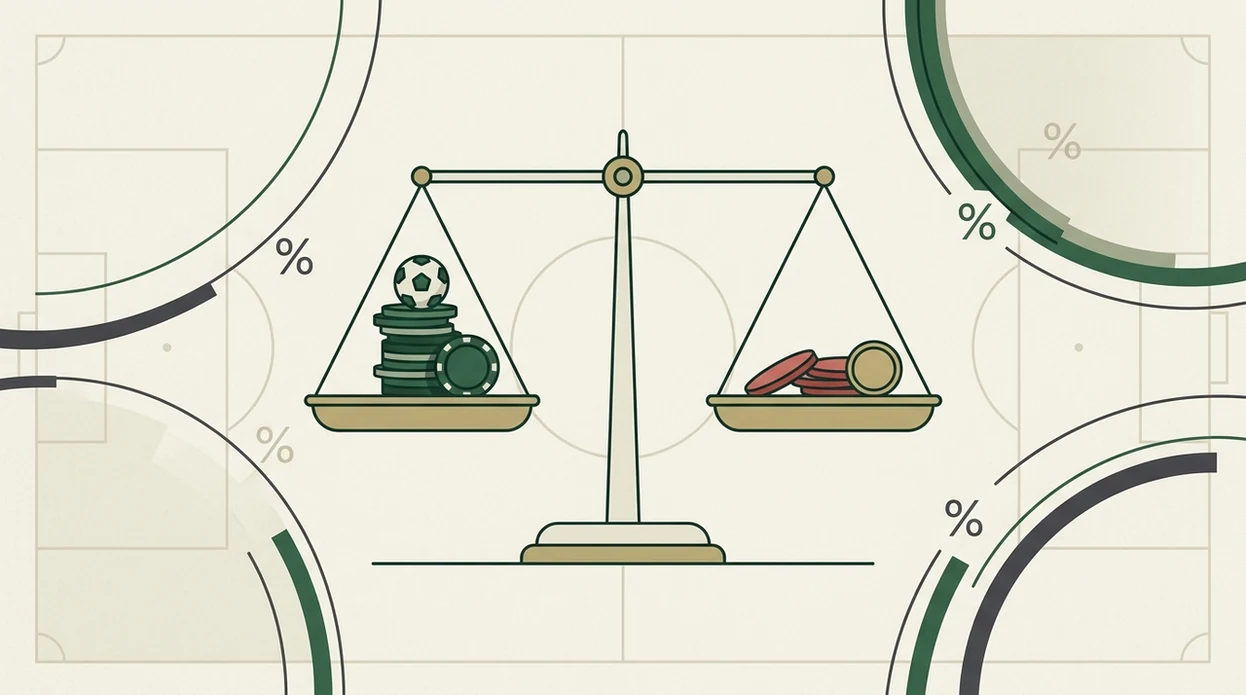
To find value football bets at the World Cup, estimate the true probability first, then compare it with the market’s implied probability. Do not start with the odds and talk yourself into liking them.
- Estimate the true probability using xG, form, injuries, tactical data, rest days, and likely lineups.
- Convert bookmaker odds into implied probabilities for each outcome.
- Compare your estimate with the implied probability and only continue if your number is higher.
- Line-shop across bookmakers to lock in the strongest available price.
- Stake 1–2% of bankroll and log the bet, odds, estimate, and calculated EV.
Step 1. Estimate True Match Probability
For a hypothetical Brazil group match, you might estimate Brazil win 54%, draw 27%, opponent win 19%.
Step 2. Convert Odds To Implied Probability
If Brazil are 2.05, the implied probability is 48.8%. An Implied probability calculator can speed this up.
Step 3. Calculate Expected Value
Your 54% estimate is higher than 48.8%, so Brazil may be +EV before margin and lineup checks.
Step 4. Line-Shop Across Bookmakers
If another book offers 2.12, take that price instead. Small differences matter.
Step 5. Stake And Record The Bet
Log it before kick-off. The paused bet slip before confirmation is where discipline actually happens.
Bankroll Management For Value Betting World Cup Markets
Bankroll management for value betting means staking small, fixed amounts so variance cannot wipe you out before your edge has time to show. The usual practical range is 1–2% of bankroll per bet.
If your World Cup bankroll is £500, a 1% stake is £5 and a 2% stake is £10. That feels slow. It is supposed to feel slow.
Chasing losses destroys positive-EV betting because it changes the staking logic after emotion enters. Health guidance treats chasing losses and borrowing to gamble as warning signs of problem gambling, so the rule should be written before the tournament starts: no increase in stake after a bad day (NHS: https://www.nhs.uk/live-well/addiction-support/gambling-addiction/).
Set a stop-loss for the full tournament. For example, if you lose 25% of the bankroll, you stop betting until after the final. Track cumulative EV against actual results, but do not treat a five-bet losing run as proof the model is broken.
The safer route is covered in more detail in Bankroll management.
Common Myths About Value Betting In Football
Value betting has useful maths behind it, but the myths around it are usually more dangerous than the markets themselves. Four come up every tournament.
Myth 1: Value betting guarantees long-term profit if you follow a formula. Reality: the formula only works if your probability estimates are better than the market after margin.
Myth 2: Any high-odds World Cup outsider is automatically value. Reality: a big price is only value when the true chance is bigger than the implied chance.
Myth 3: Basic stats or team reputation are enough. Reality: World Cup matches need context, including travel, squad rotation, tactical fit, injury news, and motivation.
Myth 4: Expected value removes luck. Reality: EV accepts luck and tries to price it. It does not produce smooth monthly profit.
The WhatsApp question is always, “Is this a banker?” My answer is usually no. It may be priced about right, or it may be one leg too many.
Good World Cup 2026 betting tips deliver probability, price context, and risk labels, not certainty dressed up as confidence.
Common Mistakes When Placing Value Football Bets
The most common value-betting mistakes are practical ones: using one bookmaker, ignoring margin, overreacting to streaks, and failing to update when team news changes. None of these look dramatic. They just leak edge.
Only using one bookmaker is the easiest mistake to fix. If one book has 1.91 and another has 2.02, the better price can decide whether the bet is +EV.
Ignoring overround is another quiet problem. A market can look generous until you convert every outcome and see the total implied probability sitting above 100%.
In-play betting adds another risk layer. Studies of online sports bettors have linked live betting with higher gambling-harm risk, partly because decisions are made quickly. For harm context, Public Health England’s evidence review notes that product features such as speed, accessibility, and continuous play can increase gambling-risk exposure (https://www.gov.uk/government/publications/gambling-related-harms-evidence-review). The phone balanced on a pub table is not a good modelling environment.
Do not confuse a hot week with skill. Do not confuse a cold week with failure. And always adjust estimates when a missing centre-back or late suspension changes the match shape.
For broader planning, World Cup betting strategy explains how market selection fits the full tournament.
Responsible Betting Risks In World Cup 2026 Markets
Value betting is still gambling, and gambling always carries a real risk of financial loss. A positive-EV estimate is not income, not a salary plan, and not a substitute for employment.
Gambling Commission data reported that 19.7% of adults in Great Britain had gambled online in the previous four weeks in 2022 (UK Gambling Commission: https://www.gamblingcommission.gov.uk/statistics-and-research/publication/statistics-on-participation-and-problem-gambling-for-the-year-to-september-2022), with sports betting among the common activities. Another UK Gambling Commission study found that 46% of online sports bettors bet at least weekly (UK Gambling Commission: https://www.gamblingcommission.gov.uk/statistics-and-research/publication/online-gambling-behaviour-in-great-britain). Frequency matters because repeated exposure makes discipline harder.
European research has estimated problem gambling prevalence at roughly 0.1–3.4% of adults (European gambling prevalence review: https://www.ncbi.nlm.nih.gov/pmc/articles/PMC8876693/), with sports betting among the contributing forms. If betting stops feeling optional, stop.
Use support resources such as GamCare and BeGambleAware if you are chasing losses, hiding bets, borrowing money, or betting to fix a mood. That is the line. Cross it, and the price no longer matters.
Tools like WCBettingTips can structure World Cup probabilities, but they cannot make gambling risk disappear.
Limitations
Value betting has hard limits, especially in a short World Cup tournament. The maths is useful, but the edge is often smaller than bettors want to believe.
- Estimating true probabilities for World Cup matches is extremely noisy and model-dependent.
- Bookmakers use sophisticated models and adjust lines quickly, so casual bettor edges are usually small.
- Football variance is high. Red cards, penalties, injuries, and low-scoring randomness can create long losing runs.
- Access to the best odds may be restricted by location, regulation, account limits, or bookmaker stake restrictions.
- Value betting is still gambling with real financial risk. It is never a guaranteed income strategy.
- Promotions, free bets, early payout offers, and boosted odds can distort whether a bet is truly +EV.
- Short tournaments create tiny samples, making it almost impossible to prove your edge statistically during one World Cup.
- Emotional attachment matters. If you are betting your own country, your estimate may not be neutral.
For most bettors, flat staking is easier than aggressive staking because it reduces the damage from estimation errors and emotional decisions.
WC Betting Tips can show structured match angles, but the final decision still needs price, stake, and risk control.
FAQ
How do you calculate a value bet?
Calculate a value bet by comparing your estimated probability with the implied probability from the bookmaker’s odds. If your estimate is higher and the EV formula is positive, the bet may have value.
What is value betting for beginners?
Value betting means only placing bets where you believe the true chance of an outcome is higher than the bookmaker’s price suggests. It is about price, not simply picking winners.
Does value betting guarantee profit?
No, value betting does not guarantee profit. It improves long-term expectation only if your probability estimates are accurate and you manage variance.
What is expected value in betting?
Expected value is the average profit or loss a bet would produce if the same situation were repeated many times. It is calculated by weighting possible profit and loss by their probabilities.
How do odds convert to probability?
Decimal odds convert to implied probability with the formula 1 divided by decimal odds. For example, odds of 2.00 imply 50%, before adjusting for bookmaker margin.
Is value betting legal?
Value betting is legal where sports betting itself is legal, because it is simply a method for selecting bets. Bookmakers may still restrict or limit some accounts.
What bankroll percentage should I stake per value bet?
A common value-betting stake is 1–2% of total bankroll per bet. This helps manage variance and reduces the risk of losing the bankroll quickly.
Can you value bet on World Cup props?
Yes, World Cup props, totals, player shots, cards, and corners can contain value. They are often harder to model accurately than main match-result markets.
Why do value bets still lose?
Value bets still lose because positive EV does not mean certainty on a single event. Variance, red cards, finishing swings, and estimation errors all cause losing bets.